Monica Lasky
Human-Induced Fear in African Wildlife
Breaking the human shield: Predator habituation may reduce human effects on predator-prey dynamics
Check out a preprint of our paper here! The data collected for this study is available for public use here!
here here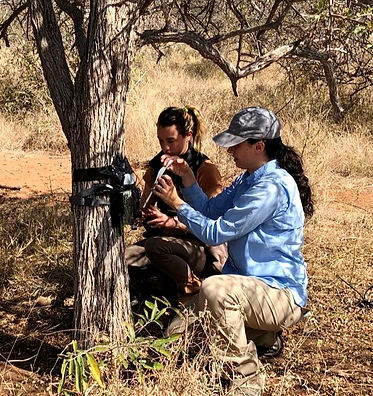
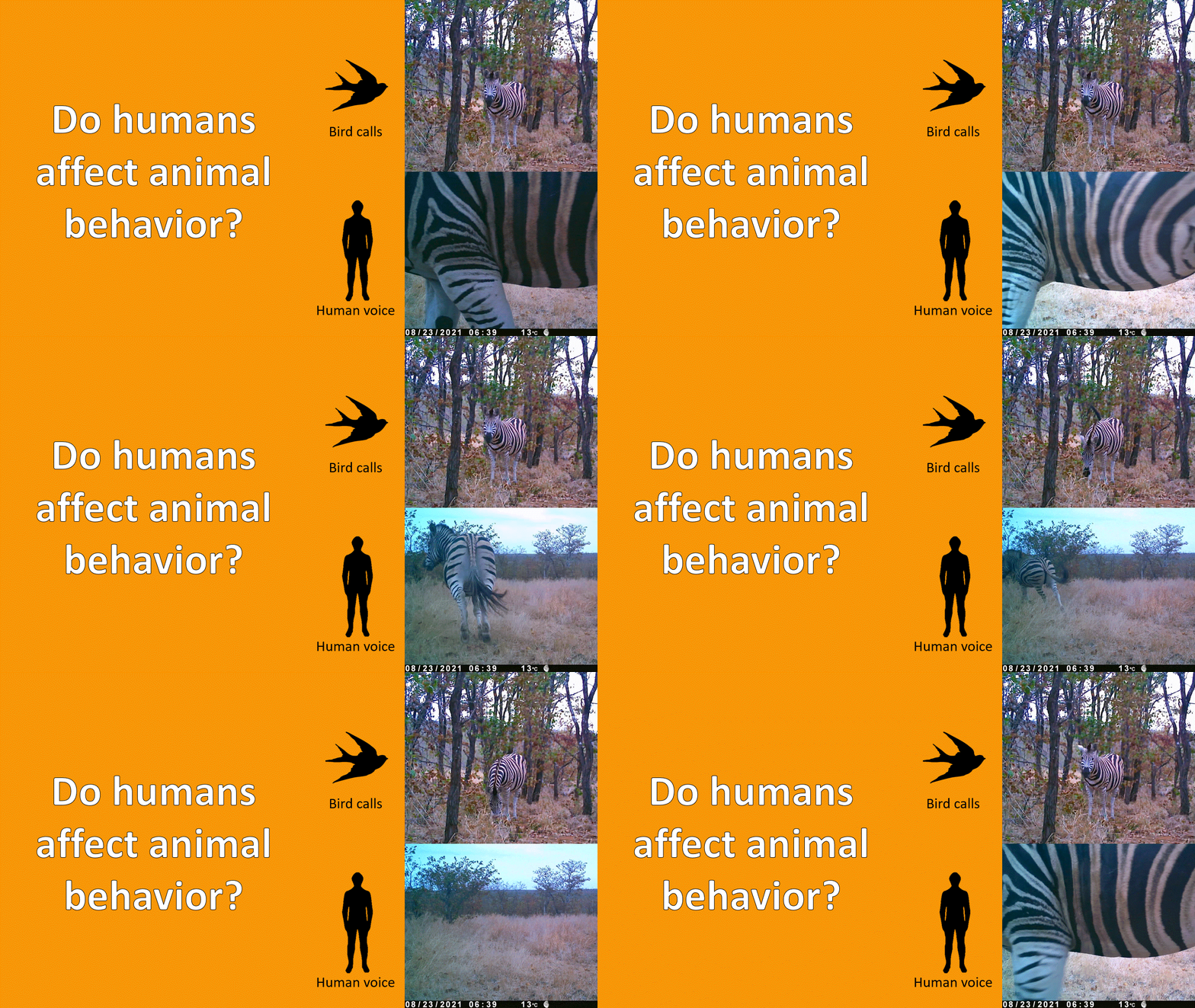
While many species are fearful of human presence, others may habituate after prolonged, non-lethal exposure. Highly persecuted carnivores often take longer to habituate than herbivores, which can lead to prey associating with humans to ‘shield’ themselves from predators. We conducted an experiment in a hyper-diverse African reserve to examine how an apex predator (spotted hyena) and two primary prey species partition spatiotemporal activity in response to 1) threatening human voice playbacks and 2) long-term, less-threatening tourism activity.
Hyenas avoided areas with human voice playbacks during the day, allowing prey to use these areas diurnally to shield themselves from predation. Neither predator nor prey were deterred from sites with tourists. This apparent habituation by predators conserved co-occurrence between predators and their prey, ‘breaking’ the human shield. While use of human shields may be widespread among large mammalian predators and prey, these effects may lessen through time in the absence of predator persecution.